· mathematics · 3 min read
The Unlikely Connection - Category Theory in AI and Machine Learning
Unveiling the elegance of Category Theory and how it finds surprising applications in the world of AI and Machine Learning.
Overview
Hey folks! 🙌 Today, let’s talk about something that might initially seem like an odd coupling: Category Theory and its applications in AI and Machine Learning. Believe it or not, these seemingly disparate areas share more common ground than you’d think. So, buckle up as we explore this uncanny connection and decipher how abstract mathematical constructs could inform advanced algorithms.
What’s Category Theory Anyway?
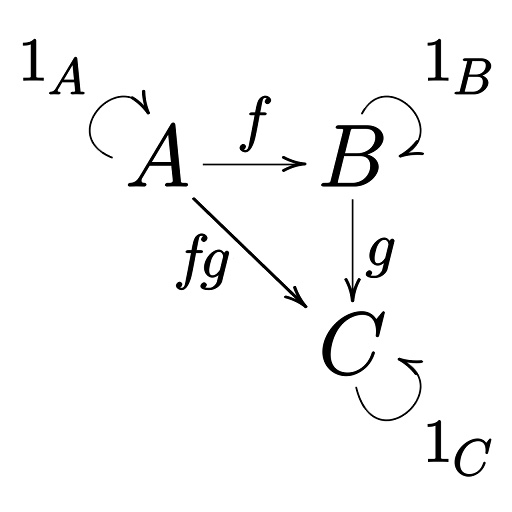
For the uninitiated, Category Theory is a branch of mathematics that deals with abstract structures and relationships between them. It’s like the “math of math,” aiming to understand the deep properties of mathematical concepts by looking at the morphisms (think: functions, but more generalized) between them.
The Bridge to AI and ML
So, how does all this relate to Artificial Intelligence and Machine Learning? These fields often involve intricate structures and models—neural networks, decision trees, clustering algorithms, you name it! Understanding the mathematical relationships between these models can offer insights into their behavior and limitations.
Functors and Data Transformation
A ‘functor’ in category theory is like a translator between two categories, preserving their structure. In the data science realm, think of it as your data preprocessing or transformation steps. They map raw data (one category) into a processed, usable form (another category) while preserving the underlying relationships (structure).
Monoids and Aggregation Functions
Another concept, the ‘monoid,’ is a single, associative operation and an identity element. In AI algorithms, especially in parallel or distributed systems, monoid operations like summing or taking the max/min can be applied without worrying about the order, offering computational efficiency.
Natural Transformations and Model Transferability
Natural transformations provide a way to shift from one functor to another while respecting the structures involved. In machine learning, this translates to the idea of transfer learning: taking a model trained on one task and adapting it for a similar but distinct task.
Concrete Applications
You might wonder, “Okay, but has anyone actually applied category theory to machine learning?” Yes! Researchers are exploring how category theory can aid in model interpretability, optimization, and even in designing new types of neural networks.
Why Does This Matter?
Learning AI and ML involves a lot of tinkering—choosing models, tuning parameters, preprocessing data—but understanding the mathematical backbone provides a more principled way of going about it. Category theory gives us a toolkit for understanding the “why” behind the “how.”
Wrapping Up
Category Theory is not just abstract nonsense but provides a language for revealing and understanding the structures present in various fields, including AI and ML. The more we understand this connection, the closer we get to mastering these powerful technologies.
So, the next time someone tells you that abstract math has no real-world applications, maybe drop a line about how it’s shaping the future of AI and Machine Learning! 😎
Catch you in the next one! ✌️